
Before Rules, There Was a Way of Being
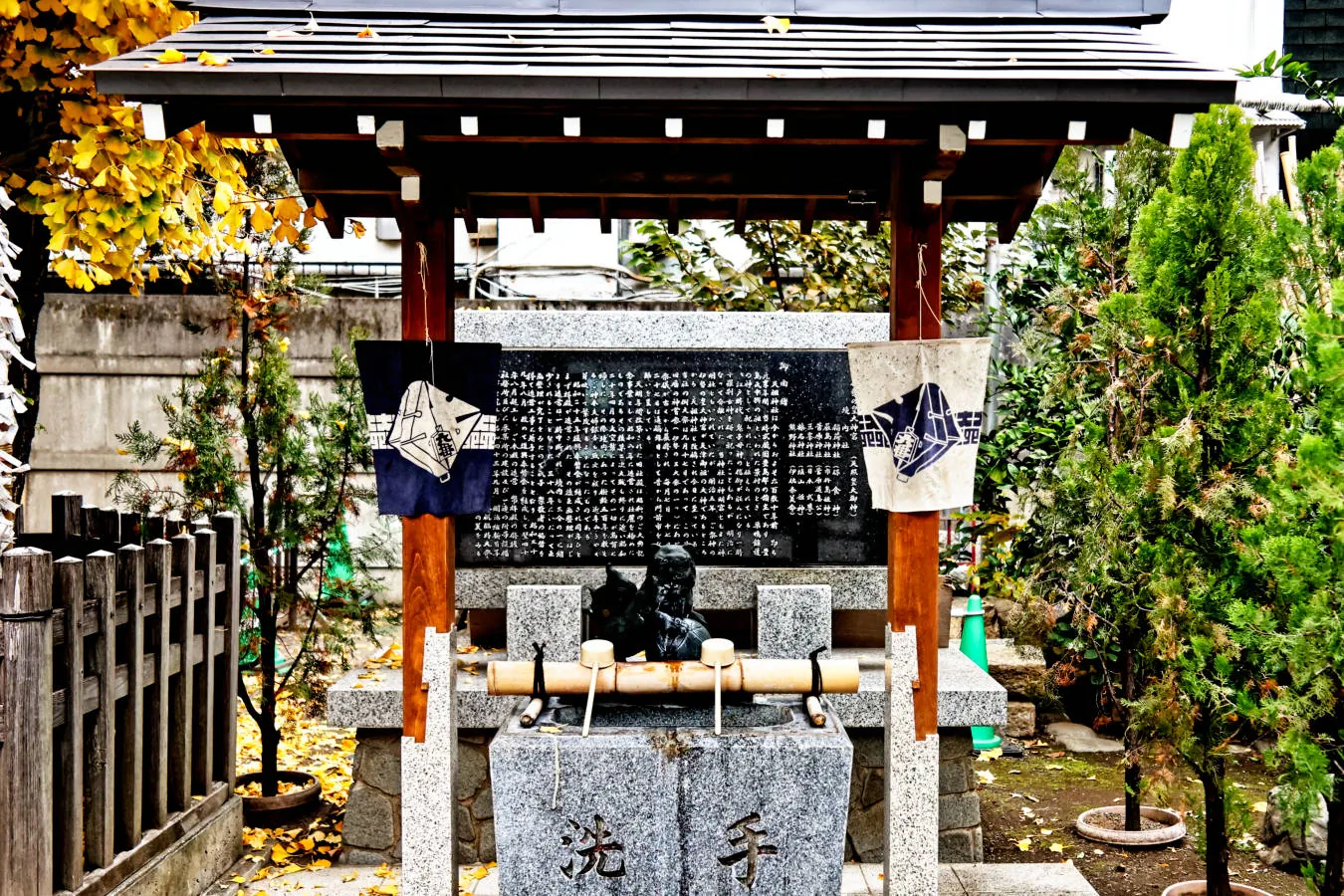
[Episode 1] Discovering the Cultural OS Part2 How Japanese mythology became a prototype of conduct and purity came to be understood as a process rather than a rule, and how this sensibility shaped a culture capable of both acceptance and resistance. Image: 手水屋(tyouzuya)A purification pavilion at the shrine entrance At the tyouzuya, visitors ritually cleanse their hands (and mind) before entering the shrine.
Part II
3. Myth as a Prototype of Conduct
— How the Japanese Have Learned from Myth —
Japanese mythology was never meant as a story about humans ruling the world.
It is true that myths were told, shaped, and written down by people.
Yet the world depicted within them does not seem to move solely according to human intentions, nor even those of the gods.
The deities who appear in these stories—Amaterasu, Susanoo, and many others—are not portrayed as flawless beings.
They harbor desire, fall into jealousy, give way to anger,and at times even commit acts that could be called wrongdoing.
Still, the narratives do not conclude with the notion that “gods are forgiven because they are gods.”
Every action carries consequences, and the world responds accordingly—sometimes settling into balance, sometimes descending into disorder.
What emerges is not a universe governed entirely by divine will, but one in which even the gods themselves cannot escape
the greater flow of nature and causality.
Rather than teaching what is “right,” Japanese mythology quietly suggestshow the world responds to the way one conducts oneself.
Through myth, people learned not how to dominate the world, but how to exist within it.
Seen this way, myth continues to live beneath the surface of culture as the earliest prototype of conduct.
4.Purity as a Core Process
— How the State of the Heart Shapes the World —
In Shinto thought, kegare—often translated as “impurity”—does not simply refer to something unclean or taboo.
It can be understood as a condition in which emotions such as desire, anger, resentment, and jealousy accumulate, gradually roughening the state of the heart.
Japanese myths do indeed contain moments where rampaging deities or calamity-bringing beings are described as “evil.” Yet many of these figures can also be read as personifications of forces that disrupt human society—powers that resist control.
They resemble unavoidable and inexplicable trials, like storms, earthquakes, or epidemics, rather than evils deliberately created by human intent.
For this reason, acts of conquest or subjugation in myth are rarely depicted as battles to annihilate absolute evil. Instead, they serve as ways of drawing a line under chaos, a response that allows people to once again live alongside the world.
What follows is not celebration or domination, but acts of appeasement, purification, and cleansing.
5. A Cultural Capacity That Does Not Reject the Foreign
— A Way of Conduct That Sometimes Accepts, and Sometimes Confronts —
The worldview shaped by myth, and the sensibility that seeks to settle disturbed states, did not remain confined to stories alone.
They quietly informed how Japanese culture responded to ideas and beliefs arriving from the outside.
Buddhism, Confucianism, Daoism, Onmyōdō — these were not rejected upon arrival.
At the same time, they were never accepted as absolute truths without question.
Some elements were embraced, others held at a distance, and at times they were actively confronted, before gradually being drawn into a distinctly Japanese context.
What appears here is not an attempt to govern the world through a single principle, but a practical way of responding to an unstable reality — deciding, moment by moment, how to engage and how to endure.
Just as even the gods in myth could not escape the flow of causality, culture, too, cannot fully control the forces that shape it from beyond.
And so, rather than choosing between rejection and submission, Japanese culture has repeatedly faced, resisted, accepted, and set boundaries where necessary.
It is through this accumulation of quiet adjustments that Japan has cultivated a distinctive softness and strength — what might be called its cultural depth, or its capacity to hold many things at once.